
Innovation in School Nutrition Programs: The Hidden Costs
September 9, 2026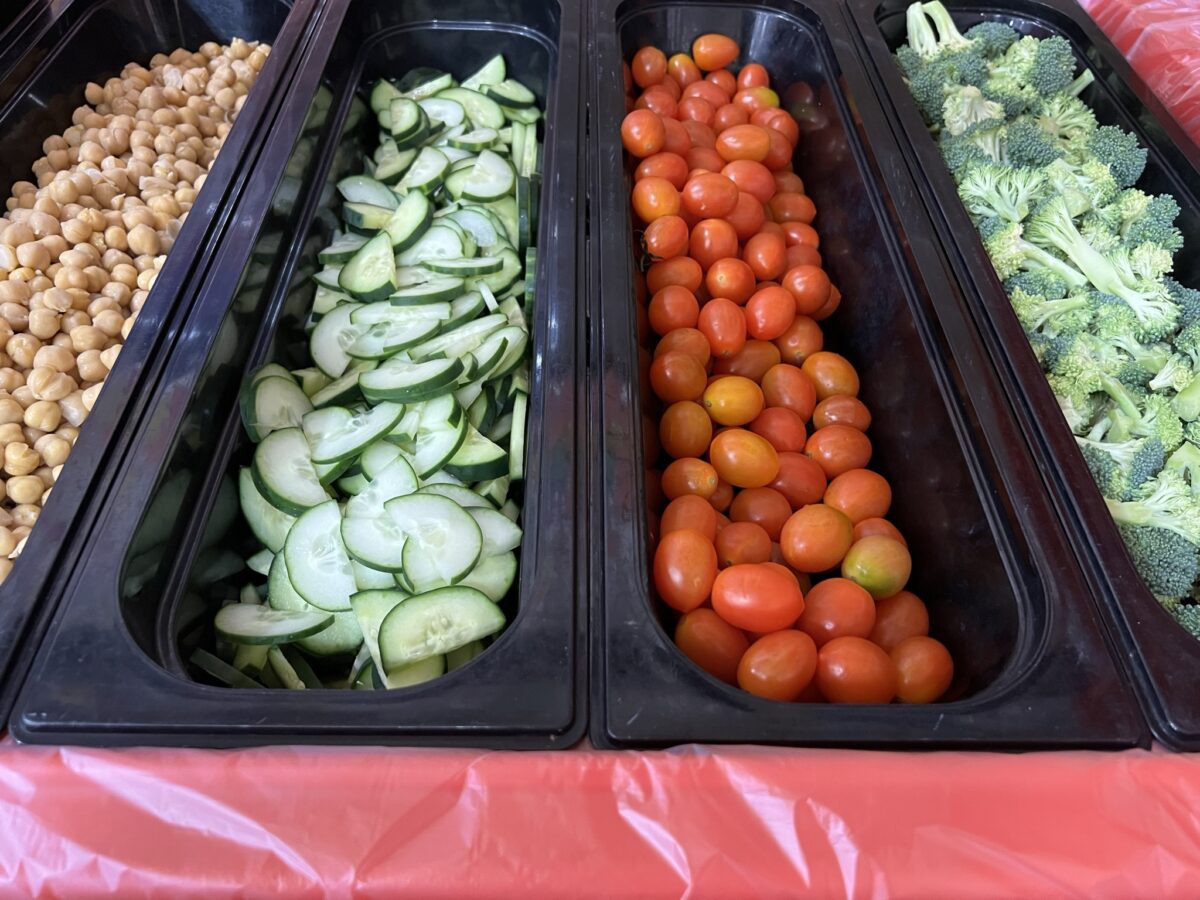
Salad bars, self-service breakfast carts, and condiment stations have become a regular part of school meal service. They help students select foods they will actually eat, and USDA recommends salad bars to boost fruit and vegetable intake and reduce plate waste.
However, these stations create a food safety control situation that differs from back-of-house prep. In the kitchen, trained staff monitor and verify safety at every step of food production, from receiving to serving. At a self-service station, that safety control shifts, at least partly, to students. Self-service bar safety depends on students being educated to wash hands before dining and use designated utensils to prevent allergen cross-contact, biological cross-contamination, and intentional food contamination.
This post focuses on self-service line food safety: the risks tied to salad bars, serving stations, and shared equipment, and how teams can manage them. It complements our earlier post, Food Safety in School Kitchens: Hidden Risks, Common Mistakes, and How to Prevent Them, which focuses on back-of-house prep.
How Self-Service Food Safety Differs from Kitchen Food Safety
What Makes These Stations Different
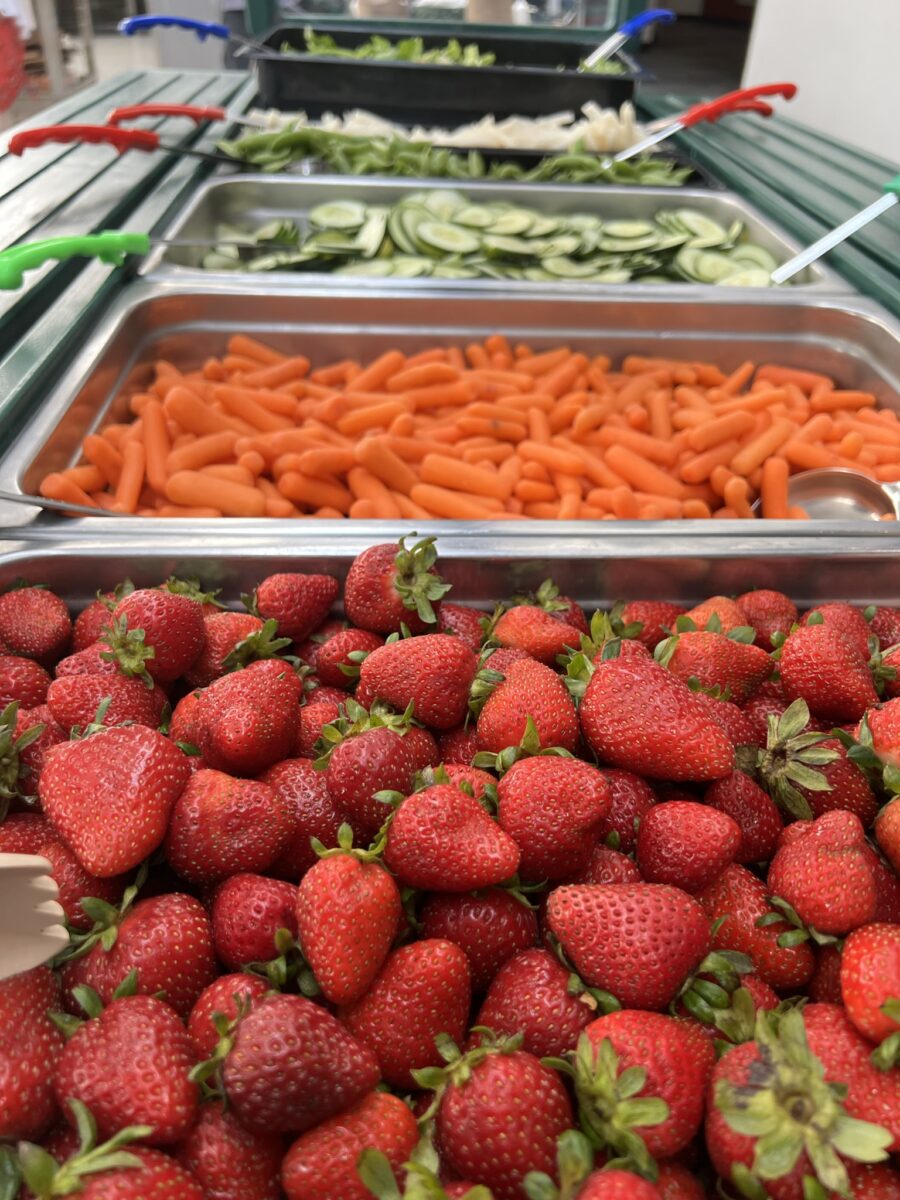
A HACCP-based food safety plan is a proactive approach to reducing or eliminating biological, chemical, and physical hazards across the kitchen: receiving, preparing, cooking, holding, transporting, and serving food. Self-service stations don’t fit neatly into that flow because they involve an audience the plan usually doesn’t account for: the students themselves.
A few things set these areas apart from back-of-house production :
- Students, not staff, are the ones handling serving tongs, scoops, avoiding bare-hand contact with foods, and using salad bar sneeze guards properly with heads above, not under.
- Students often use designated serving utensils to serve more than one item, resulting in cross-contact of allergens. One piece of shared equipment, like a ladle or a set of tongs, may touch several foods, including allergens, in a single meal period.
- The people creating the risk (students) are not the people trained to manage food safety issues (staff)
What USDA Guidance Already Tells Us to Watch For
USDA’s guidance on handling fresh produce at school salad bars lists specific behaviors staff need to watch for during service, including students touching food with bare hands, using one utensil in multiple containers, or placing dropped food back into a serving container. None of that shows up in a typical back-of-house food safety review log, which is exactly why self-service line food safety needs its own written standard operating procedure.
Self-Service Food Safety at Food and Salad Bars
Common Risk Points
Most salad bar and self-service risks originate from a handful of predictable moments:
- A shared serving utensil moves between multiple pans instead of staying with one food.
- Students touch food directly with their hands, clothing, or jewelry.
- Typically originating out of humor, students may intentionally contaminate food (e.g., insects, hair, or fake objects such as plastic spiders)
- Dropped food goes back into the container instead of the garbage can, or a dropped utensil goes back into the container instead of being replaced with a cleaned and sanitized utensil.
- New product is added on top of older product instead of emptying and cleaning the container first.
- Sneeze guards are missing, too short, or positioned so they do not actually block the line between a student’s face and the food.
- Allergen-containing items sit directly next to allergen-free items with no separation or labeling.
- Unmonitored lines run past the point of service, which USDA notes creates both a safety and a meal-counting problem.
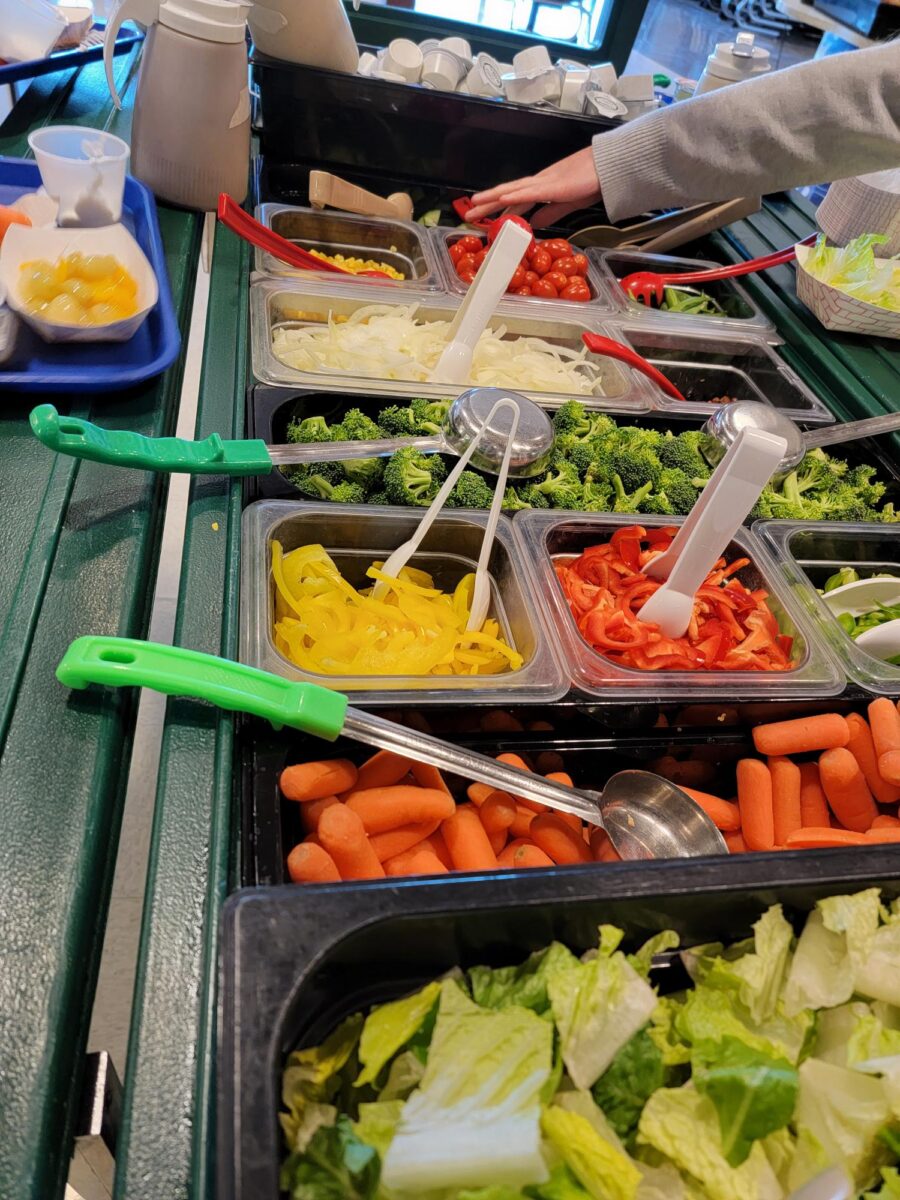
USDA recommends that elementary schools use serving equipment with a solid barrier between students and food, and pre-packaged or pre-portioned items for the youngest students. However, middle and high school students want more autonomy and freedom to select their own food. With constant monitoring by active school nutrition staff, food safety hazards are better controlled.
Prevention Strategies
- Assign one utensil per container and replace utensils at the start of each meal period.
- Empty, clean, and sanitize containers fully before reusing, and avoid layering fresh product on top of older product.
- Check sneeze guard height and placement against local health code and inspect for gaps a student could easily reach through.
- Keep a staff member actively and consistently monitoring customers and the line during service.
- Separate allergen-containing items from allergen-safe items with physical distance and clear labeling, especially dips or dressings.
- Wipe down surfaces with a sanitizing solution during and between meal periods, and store all chemicals away from food.
- Avoid using spray chemicals near food to prevent cross-contamination.
Food Safety, Temperature Control, and Shared Prep Equipment
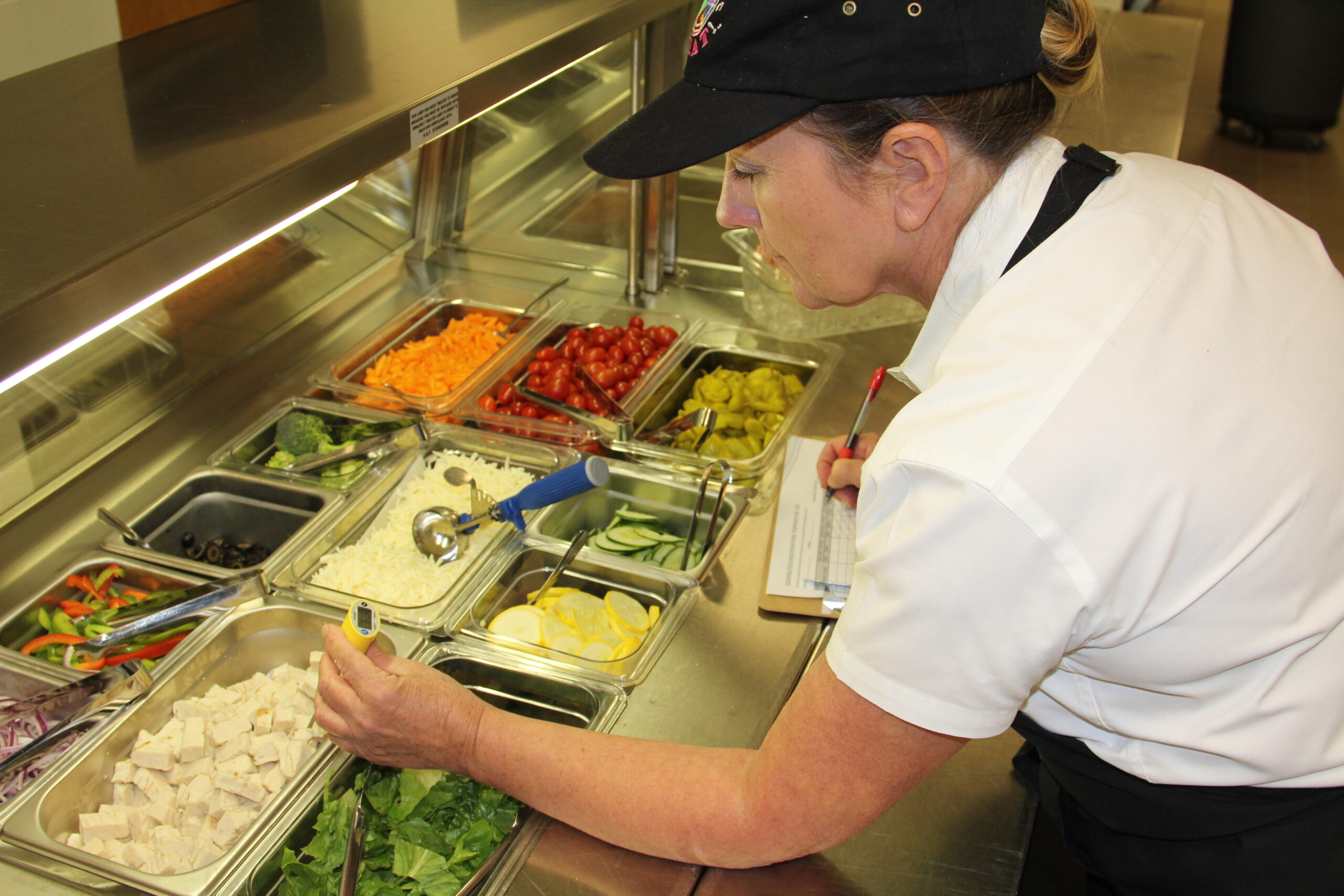
Slicers, mixers, or work tables can pose a food safety risk before the food even reaches the line. A slicer used for deli meat in the morning and tomatoes an hour later carries the same cross-contact risk as a salad bar utensil moved between containers.
Quantity food production is high risk for abuse of time and temperature controlled for safety (TCS) foods that are common on a salad bar, especially deli meats and cooked and cooled foods (e.g., hard-boiled eggs, pasta salad).
Common Risks
- Staff use slicers for raw, ready-to-eat, and allergen-containing foods without a full clean-scrub-and-sanitize cycle between uses.
- Staff reuse work surfaces without following cleaning and sanitizing procedures.
- Staff use thermometers on multiple foods without cleaning and sanitizing between uses
- The cleaning schedules posted on the bulletin board do not reflect what actually happens in a busy kitchen
- Staff abuse time and temperature of TCS foods during preparation, cooking, cooling, and holding
The FDA Food Code requires cleaning and sanitizing all food-contact surfaces used with TCS foods at least every four hours and requires disassembly before cleaning, not just wiping down between uses. The Food Code includes specific critical control points for preparing, cooking, cooling, and holding TCS foods.
Prevention Strategies
- Follow district food safety standard operating procedures for cleaning and sanitizing food contact surfaces, including the 4-hour rule for large and small equipment.
- Follow the Food Code times and temperatures for TCS foods, adopted by the State Agency, when preparing, cooking, cooling, serving, and transporting.
- Incorporate cleaning and sanitizing reminders into daily staff work schedules. Post regular cleaning schedules to maintain a clean food production environment.
- When possible, dedicate specific equipment to allergen-free preparation.
- Use color-coded tools designated by specific food types to make it easier for staff, including substitutes, to prevent cross-contact and cross-contamination.
- Train school nutrition staff on food safety standard operating procedures and monitoring and verification practices for preventing foodborne illness and allergic reactions.
Preventing Allergen Cross-Contact in Self-Service Food Safety
The Centers for Disease Control and Prevention (CDC) reports that an estimated 1 in 13 children (8%), or 2 students per classroom, are affected by food allergies.
Food Allergy Research and Education (FARE) notes that even trace amounts of an allergen transferred through shared equipment, surfaces, or hands can cause a reaction, and that plain water or hand sanitizer alone does not reliably remove allergen residue. One study FARE cites found that after handling peanut products, plain water and hand sanitizer left detectable allergen residue on hands, while scrubbing with soap and water or commercial wipes removed it.
To prevent cross-contact during preparation and self-service:
- Staff and students should be trained to prevent cross-contact of allergens.
- Soap and water, not hand sanitizer, should be the standard for staff and students before and after self-service stations.
- Staff should prepare allergen-free foods before allergen-containing foods.
- Staff should always read the label of every ingredient to look for allergens or hidden ingredients before preparing allergen-free meals.
- Shared equipment used for allergen-containing foods should undergo a full clean-scrub-and-sanitize cycle before it touches anything allergen-free.
- Staff should avoid overloading dish machines to allow for agitation and removal of potential allergens.
- Staff should clean, scrub, rinse, and sanitize all food contact surfaces between uses, since allergen residue can remain and sanitizers or heat don’t destroy it.
- Avoid reusing parchment paper with different foods to prevent allergen transfer.
Implementing Safety Protocols at Self-Service Bars
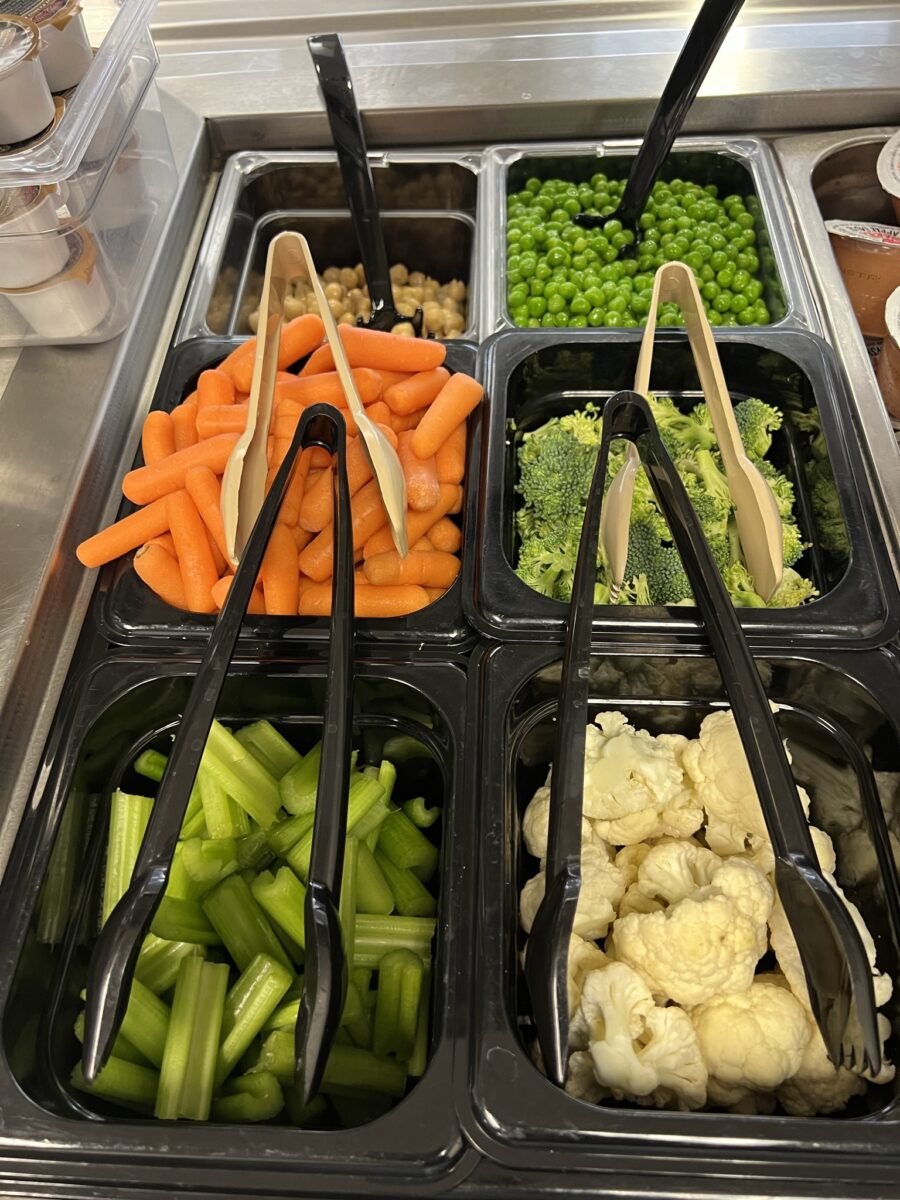
Here are a few practical tips for writing proactive food safety policies:
- Train staff who monitor the line during service to watch out for customers who cross-contaminate or cross-contact allergens.
- Use simple signage for students at self-service stations. USDA and FARE guidance recommend labeling containers and posting reminders to reinforce safe behaviors during service.
- Review food safety and cross-contact prevention Standard Operating Procedures (SOPs) when the menu changes and each time you add a new station or piece of equipment.
What's at Stake: Cost and Trust
Salad bar items may cost more than others because they require more labor to wash, cut, and sometimes portion products. Perishable items can be doubly expensive if staff do not conduct proper receiving inspections, such as First In, First Out and First In, First Expired stock rotation practices. In food production, staff should maximize product yield by controlling costs through proper knife skills and establishing edible portion targets.
SproutCNP offers on-demand training courses such as Slice and Dice: Knife Skills and Knife Maintenance, plus Process, Cook, Serve: The Skill of As Purchased and Edible Portion to support your frontline staff learning needs.
School meal program stakeholders, including students and parents, trust operators to keep food safety controls updated, monitored, and verified daily. That confidence is eroded quickly in the event of a foodborne illness or food allergy emergency.
Final Thoughts on Self-Service Food Safety
HACCP-based food safety plans have been a federal requirement in school kitchens for over 20 years. Today, program leaders and staff view proactive foodborne illness and allergic reaction prevention plans as a part of doing business. The FDA Model Food Code 2026 was just released on September 17, 2026. If you haven’t reviewed and updated your food safety plan, now is the time—it’s National Food Safety Awareness Month. For resources and information, go to the FDA Food Safety Education Month website.
SproutCNP’s On-Demand Training and Tracker Membership’s 2026-2027 curriculum supports your food safety training program with two courses: Food Safety First: Everyday Practices for Every Kitchen and Protecting Students: Allergen Awareness and Food Safety.
Interested in learning more about our training? Click here to schedule a demo.
Study Questions
Shared serving utensils moving between containers and students touching food directly are two of the most common risks USDA highlights for school salad bars.
The FDA Food Code requires food-contact surfaces used with time and temperature control for safety foods, including slicers, to be cleaned and sanitized at least every 4 hours, and disassembled before cleaning.
It can, but only with a full clean-and-sanitize cycle in between, since a wipe-down alone does not reliably remove allergen residue.
No. Research cited by FARE shows plain water and hand sanitizer leave detectable allergen residue on hands, while soap and water remove it.
A trained staff member should actively monitor the line throughout services, since most of the risks USDA identifies happen while students are actively serving themselves.